Understanding the Industrial Design Process
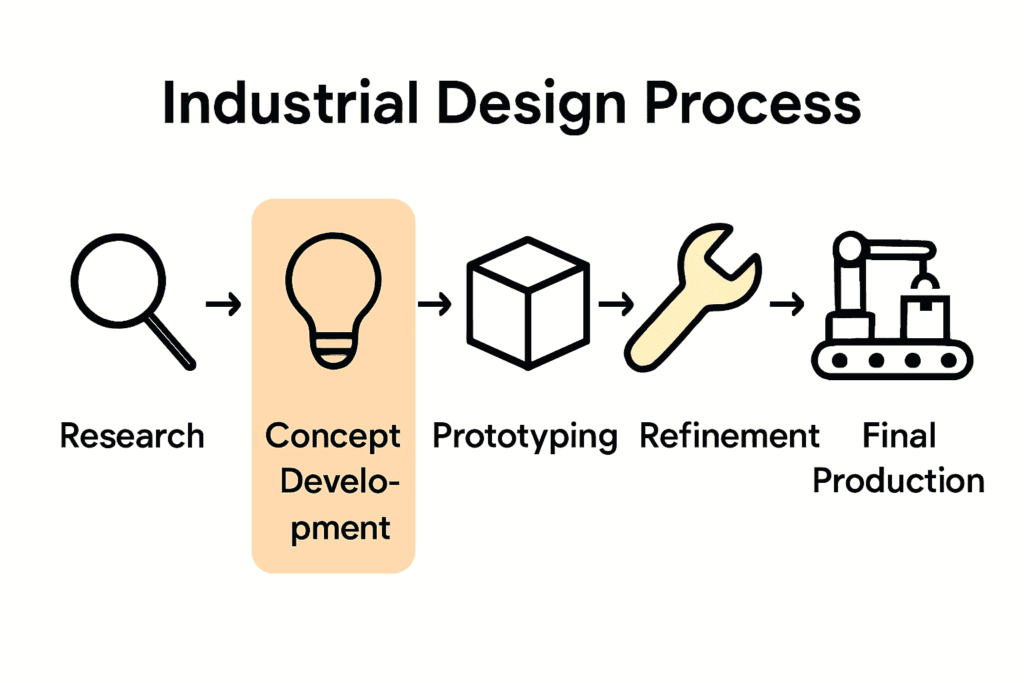
The industrial design process is a structured framework that transforms abstract ideas into tangible, user-centric products. It involves six deliberate stages: understanding user needs, defining product requirements, conceptualizing design solutions, design development and refinement, prototyping and testing, and manufacturing and production.
What is Industrial Design?
Industrial design is the process of designing, developing, and improving three-dimensional products that holistically combine functionality, usability, manufacturability, user experience, sustainability, and aesthetics. Industrial design integrates knowledge and approaches from various disciplines such as engineering, art, and business strategy to turn ideas into reality.
The Steps Involved in the Industrial Design Process
1. Research
The first stage of the industrial design process is research. This involves understanding the needs and desires of the target audience, as well as analyzing existing products in the market. Through research, designers can gain valuable insights into what users want, need, and expect from a product, which helps to inform the design process.
2. Concept Development
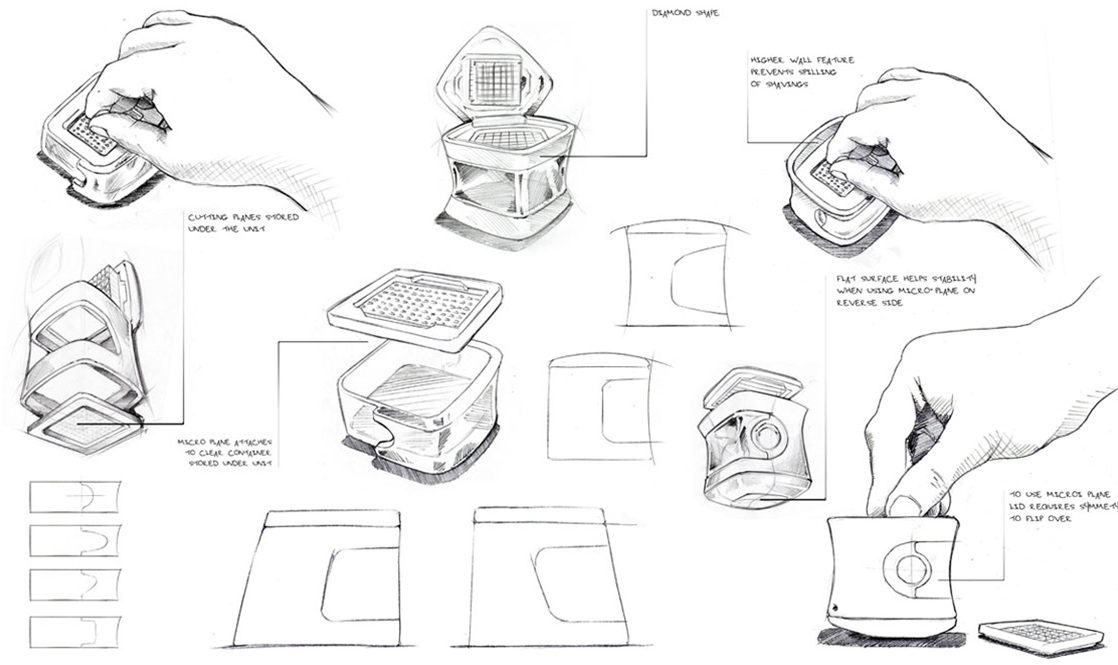
Once research is complete, the next stage is concept development. This involves generating ideas and concepts for the product, and refining them based on user needs and market analysis. Designers may use various techniques such as brainstorming, mind mapping, and sketching to generate ideas.
3. Design Development and Refinement
After concept development, the next stage is design development and refinement. This involves creating detailed design specifications, developing prototypes, and refining the design based on user feedback and market analysis.
4. Prototyping and Testing

Prototyping and testing is the next stage of the industrial design process. This involves creating a physical prototype of the product and testing it with users to gather feedback and identify areas for improvement.
5. Production Planning and Engineering
Once the design is finalized, the next stage is production planning and engineering. This involves creating detailed specifications for the product, designing the production process, and ensuring that the product meets all relevant safety and regulatory requirements.
6. Design for Manufacturing
The final stage of the industrial design process is design for manufacturing. This involves designing the product with manufacturing in mind, ensuring that it can be produced efficiently and effectively, and that it meets all relevant quality and safety standards.
Why is the Industrial Design Process Important?
The industrial design process is important because it helps to ensure that products are designed with the user in mind, are manufacturable, and meet all relevant safety and regulatory requirements. By following a structured design process, designers can create products that are innovative, functional, and aesthetically pleasing, which can help to drive business success and improve user experience.
Conclusion
In conclusion, the industrial design process is a structured framework that transforms abstract ideas into tangible, user-centric products. It involves six deliberate stages: research, concept development, design development and refinement, prototyping and testing, production planning and engineering, and design for manufacturing. By following this process, designers can create products that are innovative, functional, and aesthetically pleasing, which can help to drive business success and improve user experience.
References:
- Industrial Design Society of America. (n.d.). What is Industrial Design? Retrieved from https://www.idsa.org/what-is-industrial-design
- Industrial Design. (n.d.). The Industrial Design Process. Retrieved from https://www.industrial-design.org.uk/the-industrial-design-process
- IDEO. (n.d.). The Industrial Design Process. Retrieved from https://www.ideo.com/ideas/the-industrial-design-process