The Impact of Continuous Partial Attention on Relationships and Work
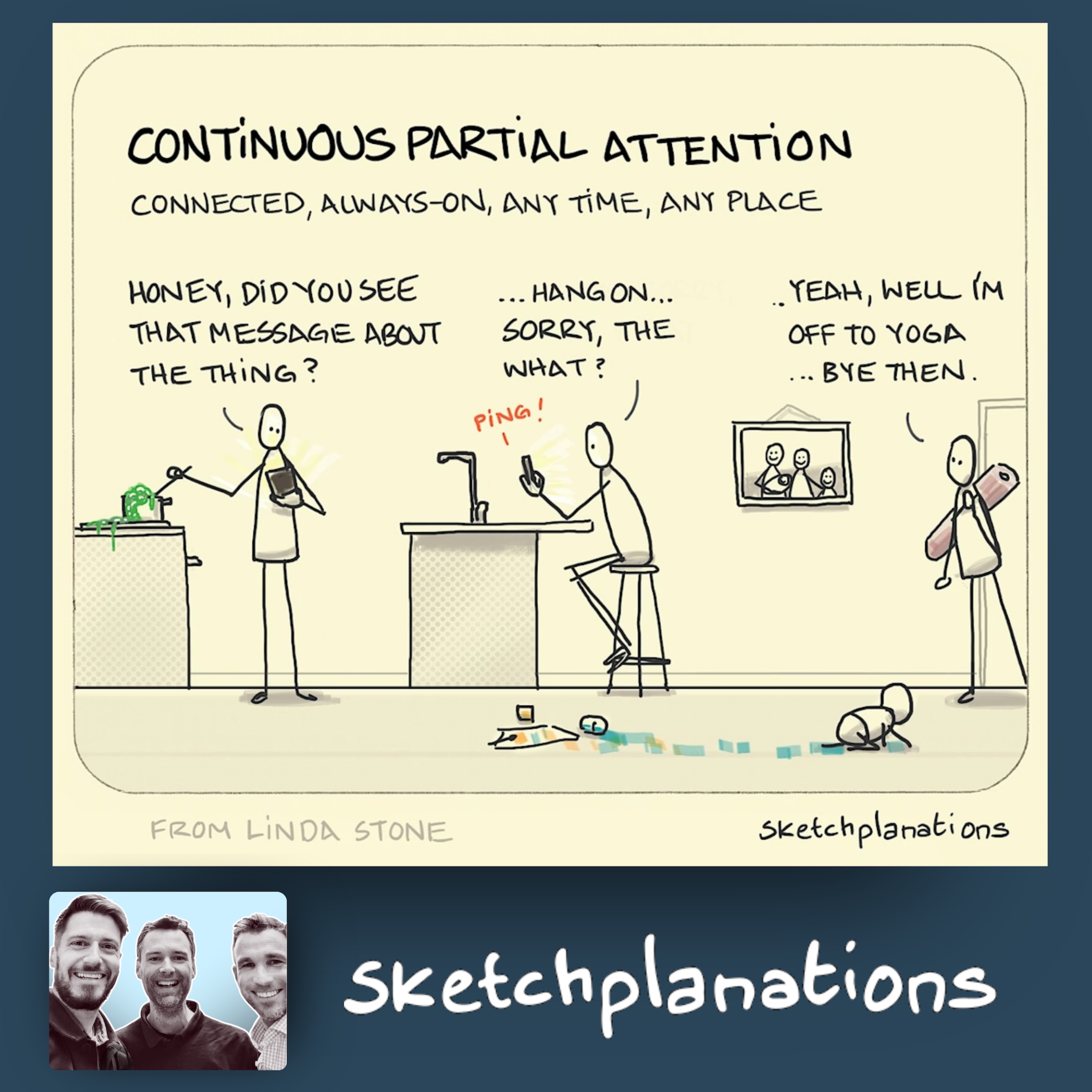
Continuous Partial Attention (CPA) is a behavior where individuals divide their attention, scanning and optimizing opportunities to avoid missing anything that is going on, coined by Linda Stone in 1998. This phenomenon is often confused with multitasking, but it is a distinct concept driven by a subconscious desire to stay constantly connected. While multitasking is motivated by a desire to be productive, CPA is an automatic process that seeks to stay engaged with multiple sources simultaneously.
The Impact on Relationships
- The constant connectedness associated with CPA can negatively impact relationships due to the lack of face-to-face interaction and deep engagement.
- CPA can lead to decreased productivity levels, as individuals struggle to focus on a single task or conversation.
- It can also result in overstimulation and a lack of fulfillment, as individuals feel constantly drained and disconnected from meaningful interactions.
The Impact on Work
- CPA can have a significant impact on productivity, as individuals struggle to focus on a single task or project.
- It can also lead to increased stress levels, as individuals feel constantly connected and responsive to multiple sources.
- Moreover, CPA can dilute efforts to focus and concentrate on the present moment, prohibiting reflection, contemplation, and thoughtful decision-making.
Understanding Continuous Partial Attention
CPA is closely related to several other key psychological concepts, providing a bridge between theories of attention, social behavior, and technology use. In order to understand the implications of CPA, it is essential to recognize its characteristics, such as the constant scanning of multiple sources, the fear of missing out, and the desire to stay connected.
The Consequences of Continuous Partial Attention
- CPA can lead to increased stress and decreased ability to focus and concentrate on the present moment.
- It can also result in reduced productivity, decreased memory retention, and increased stress levels.
- Moreover, CPA can have a negative impact on cognitive performance and overall well-being.
Strategies to Manage Continuous Partial Attention
- Implementing time-blocking and scheduling can help individuals prioritize tasks and minimize distractions.
- Setting boundaries and establishing "no email" or "no meeting" days can help reduce the constant connectedness associated with CPA.
- Practicing mindfulness and meditation can also help individuals develop greater awareness and control over their attention.
Conclusion
The impact of Continuous Partial Attention on relationships and work is significant, with a range of negative consequences, including decreased productivity, increased stress levels, and reduced cognitive performance. By understanding the characteristics of CPA and implementing strategies to manage it, individuals can develop greater control over their attention and improve their overall well-being.