How to Learn Python Regular Expressions
Introduction to Regular Expressions
Regular expressions, commonly referred to as regex, are a powerful tool for matching and manipulating text patterns. In Python, the re module provides a robust set of functions to work with regular expressions. Learning regular expressions in Python can be a game-changer for developers, as it allows them to efficiently validate, search, and replace text in a variety of applications.
Why Learn Regular Expressions in Python?
- Regular expressions are a standard tool in many programming languages, making it an essential skill for any developer to learn.
- Python's re module provides an extensive set of functions for working with regular expressions, making it an ideal language for learning regex.
- Regular expressions can be used for a wide range of tasks, including data validation, text processing, and web scraping.
Getting Started with Python Regular Expressions
To get started with learning regular expressions in Python, it's essential to familiarize yourself with the re module and its functions. The re module provides a range of functions for working with regular expressions, including:
re.search(): Searches for the first occurrence of the pattern in the string.re.match(): Matches the pattern at the beginning of the string.re.compile(): Compiles a regular expression pattern into a regular expression object, which can be used for matching using its methods
Basic Concepts of Regular Expressions
Before diving into the specifics of the re module, it's essential to understand the basic concepts of regular expressions. Some key concepts include:
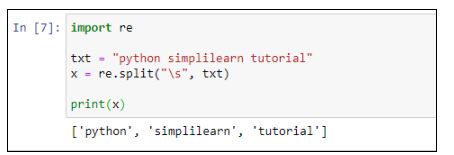
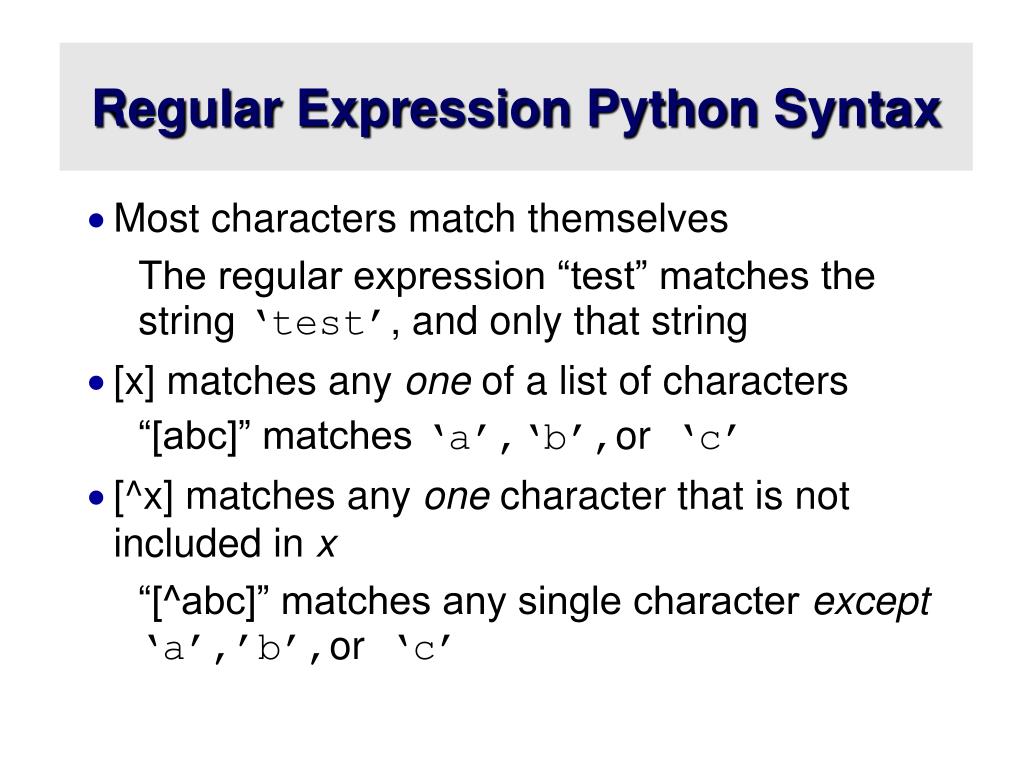
\: The backslash is used to escape special characters, such as dots, and to denote special sequences, like newlines.^and$: These characters match the start and end of a string, respectively..*and.*?: These patterns match any character, including none, and can be used for matching entire strings or searching for patterns within strings.[and]: These characters are used to denote character classes, which can match specific characters or patterns.
Common Regex Patterns
Some common regex patterns include:
\d+: Matches one or more digits.\w+: Matches one or more word characters (letters, numbers, or underscores).[a-z]+: Matches one or more lowercase letters.

Real-World Applications of Regular Expressions
Regular expressions have a wide range of applications, including:
- Validation: Regular expressions can be used to validate user input, ensuring that it matches a specific pattern.
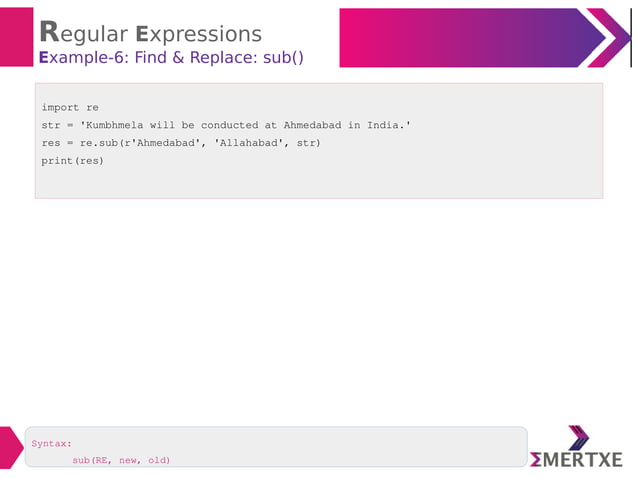
- Text processing: Regular expressions can be used to search, replace, and manipulate text in a variety of applications.
- Web scraping: Regular expressions can be used to extract specific data from web pages, making it an essential tool for data scraping.
Conclusion
Learning regular expressions in Python can be a powerful tool for developers, allowing them to efficiently validate, search, and replace text in a variety of applications. By understanding the basic concepts of regular expressions, familiarizing yourself with the re module, and applying regular expressions to real-world scenarios, you'll be well on your way to becoming proficient in regular expressions in Python.
Additional Resources
For further learning and practice, check out the following resources:
Practice Time!
Now that you've learned the basics of regular expressions in Python, it's time to practice! Try working on some exercises, such as:
- Using regular expressions to match a specific pattern in a string.
- Creating a regular expression to validate user input.
- Using regular expressions to extract specific data from a web page.
Remember, practice makes perfect, and the best way to learn regular expressions is by working on real-world projects and experimenting with different patterns and techniques.