The Allure of Art Deco: A Style That Defined the Roaring Twenties and Beyond
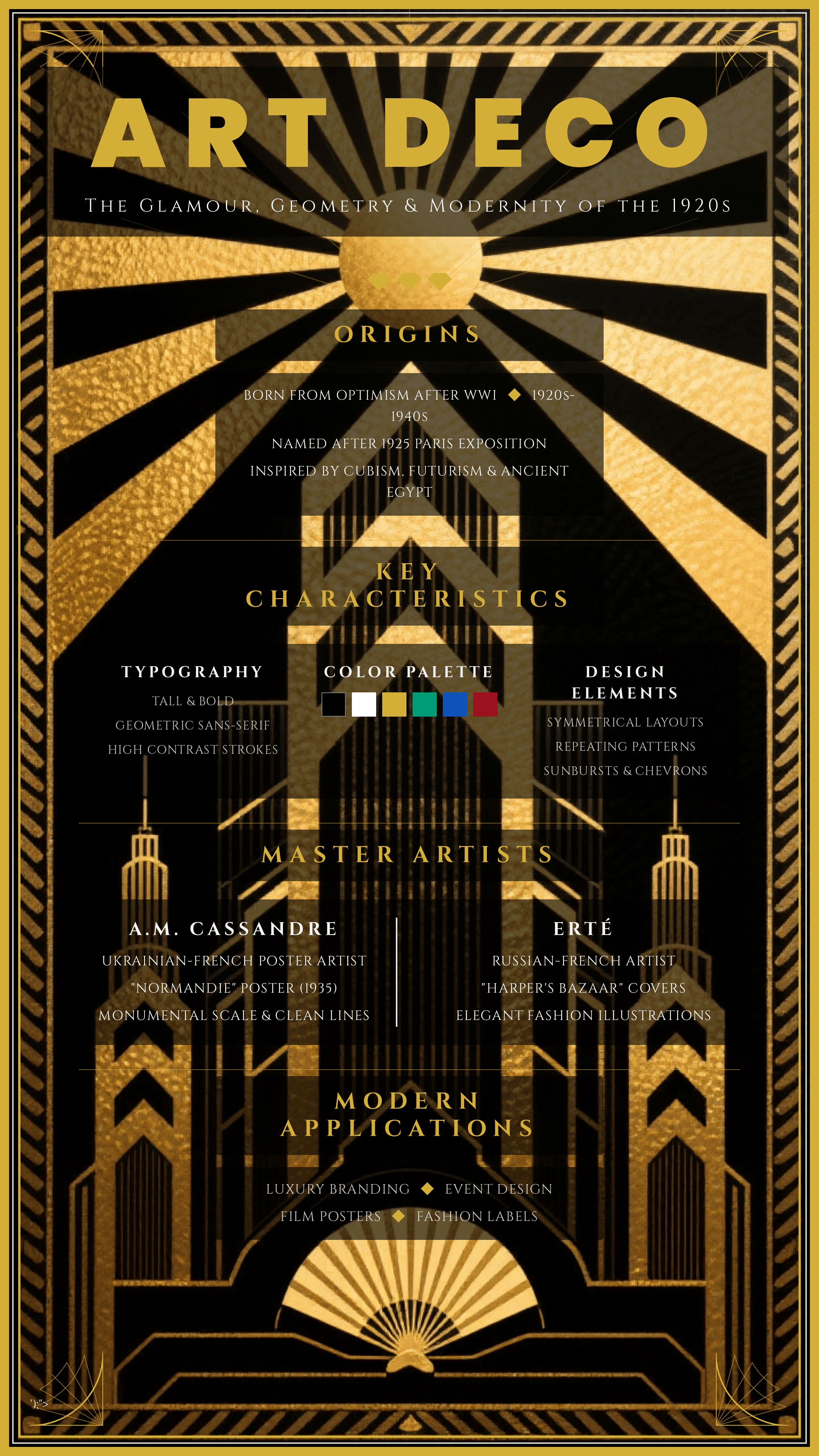
Art Deco, short for the French "Arts Décoratifs," is a style of visual arts, architecture, and product design that emerged in Paris in the 1910s and flourished internationally during the 1920s to early 1930s. Characterized by its use of geometric shapes, luxurious materials, and vibrant colors, Art Deco became a symbol of modernity, glamour, and excess.
A Brief History of Art Deco
Art Deco originated in the 1910s and 1920s in Western Europe, particularly in France, where it was influenced by the Paris Exposition of 1925, which showcased the latest trends in decorative arts and industrial design. The style quickly gained popularity worldwide, with notable examples in the United States, the United Kingdom, and Australia. Art Deco's heyday was from the late 1920s to the early 1940s, but its influence can still be seen in modern design today.
Key Features of Art Deco
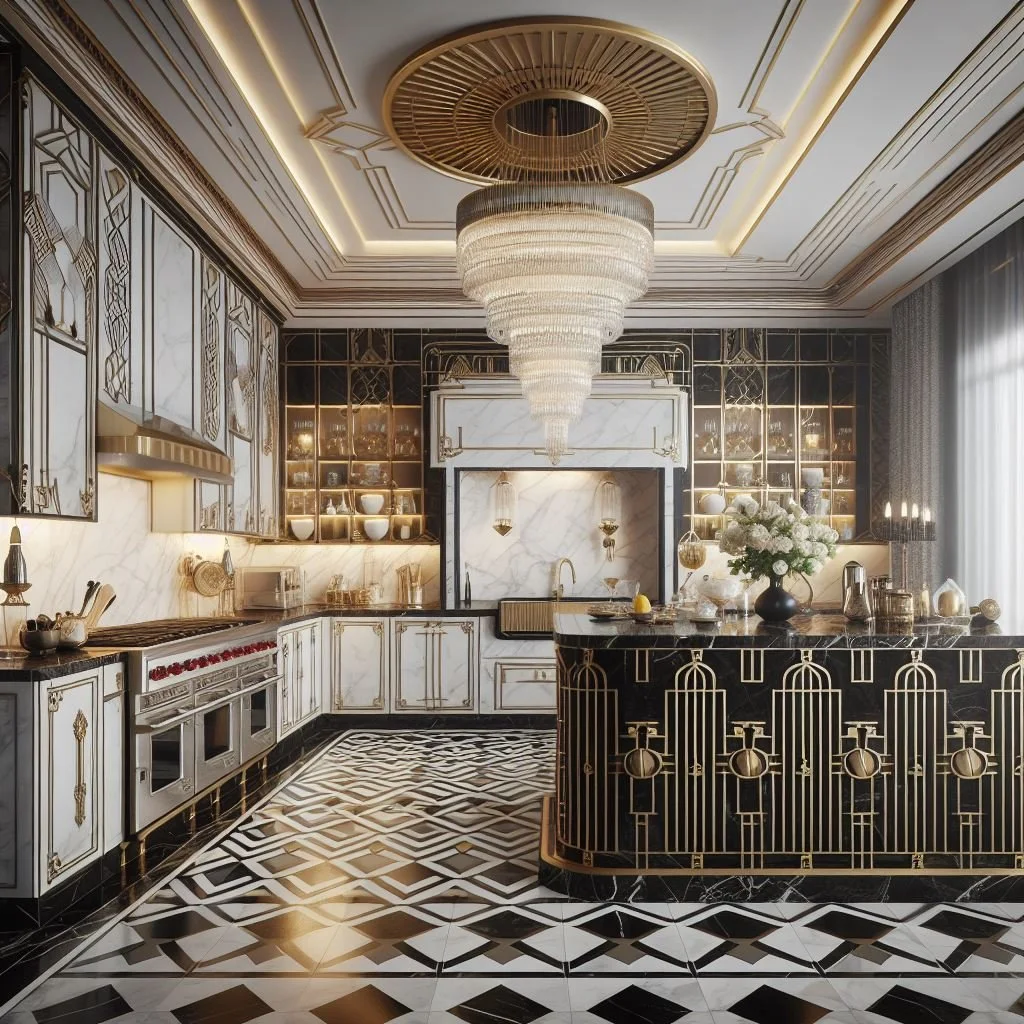
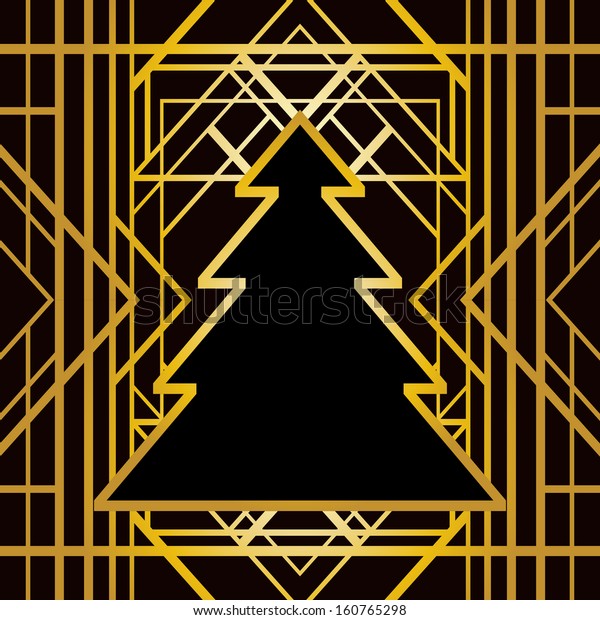
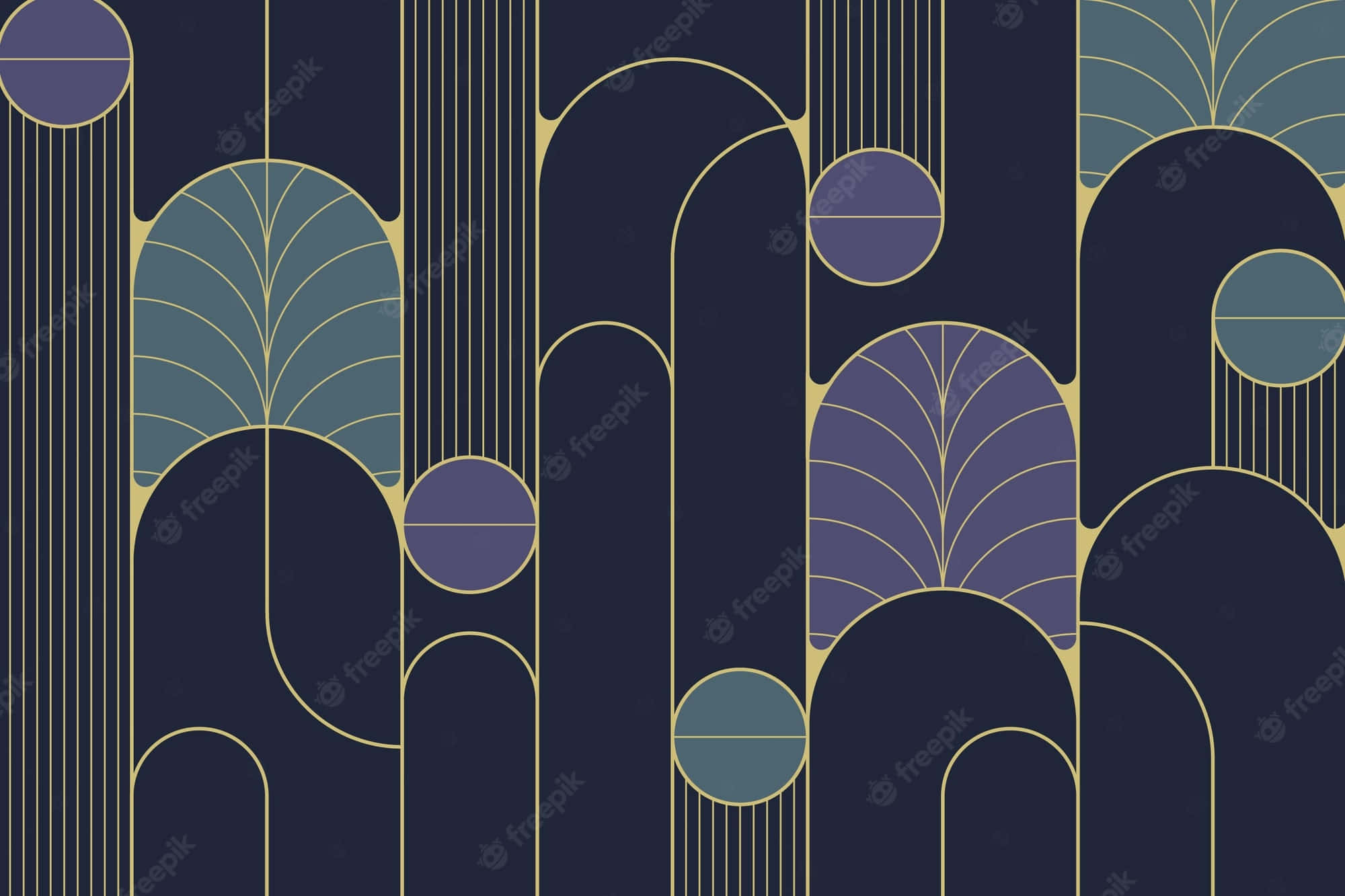
- Geometric Shapes: Art Deco often features geometric shapes, such as triangles, circles, and hexagons, which are used to create intricate patterns and designs.
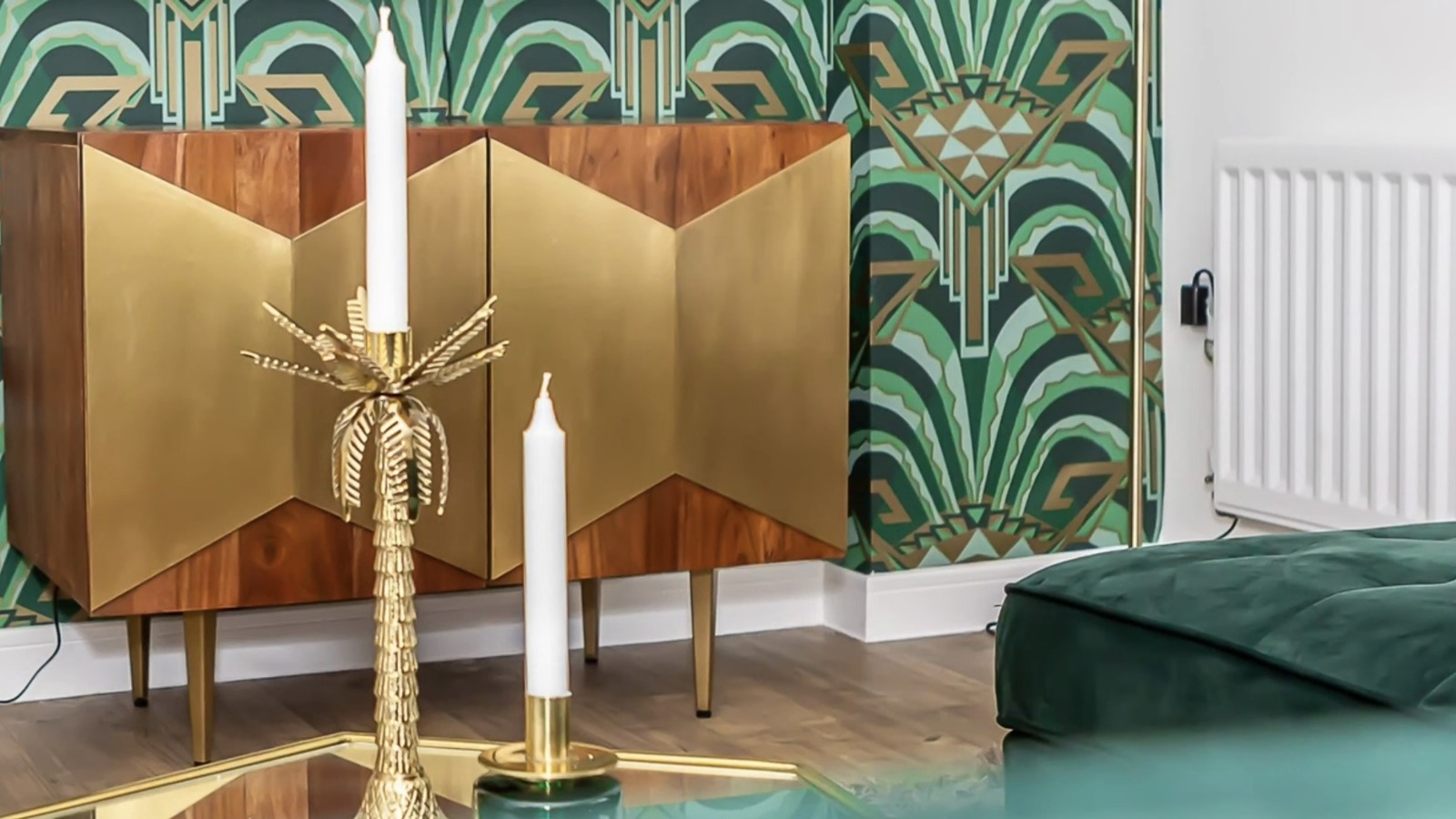
- Luxurious Materials: Art Deco is characterized by the use of luxurious materials, such as chrome, silver, gold, and ivory, which add a touch of opulence and sophistication.
- Vibrant Colors: Art Deco often incorporates vibrant colors, such as red, blue, and yellow, which were popularized by the 1920s and 1930s.
- Streamlined Forms: Art Deco's streamlined forms and curved lines reflect the era's fascination with modernity and the machine age.
The Influence of Art Deco
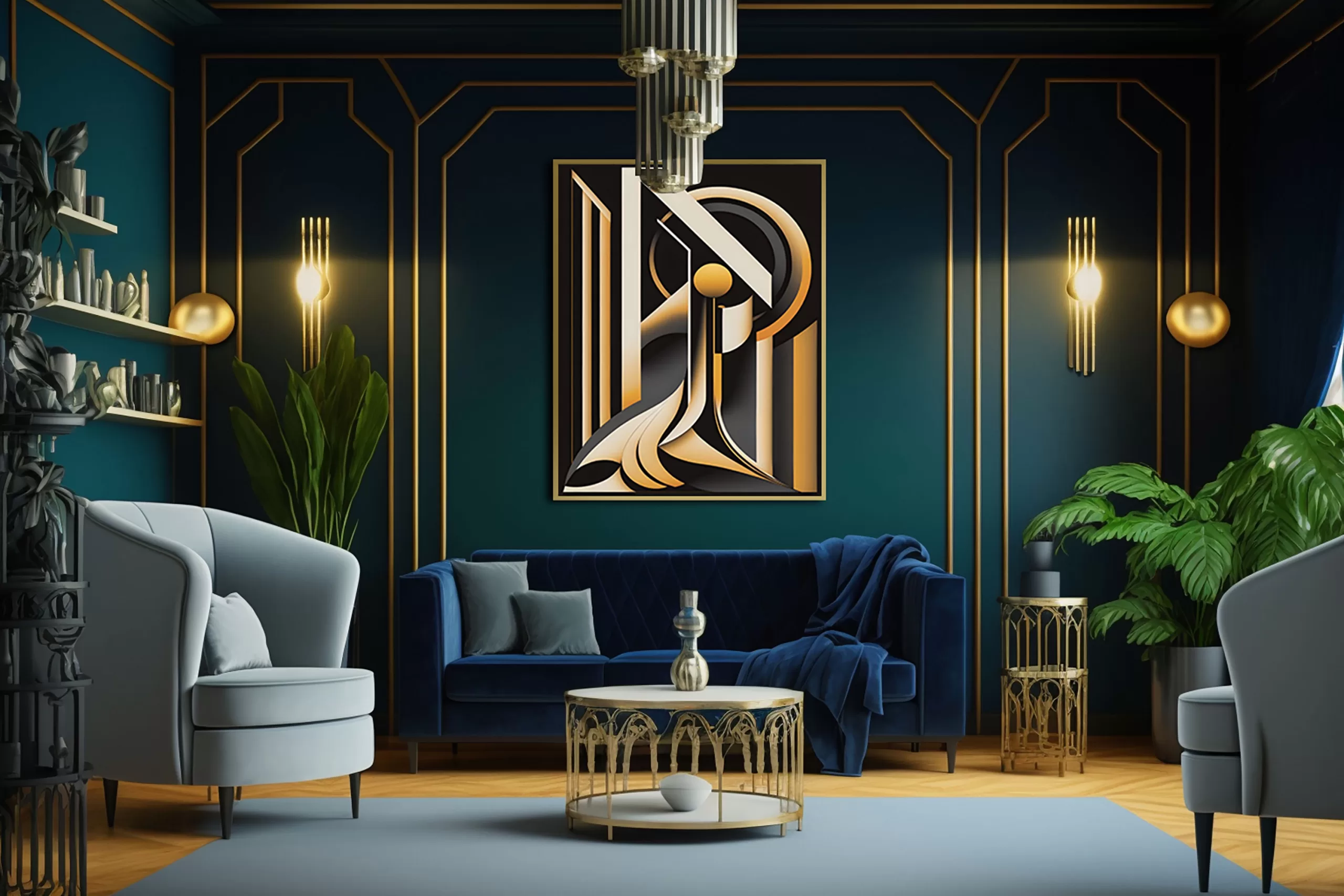
Art Deco's influence can be seen in various aspects of design, architecture, and art. Some notable examples include:
- Architecture: Art Deco's distinctive style can be seen in iconic buildings, such as the Chrysler Building in New York City and the Sydney Opera House in Australia.
- Product Design: Art Deco's influence can be seen in the design of everyday objects, such as furniture, jewelry, and household items.
- Fashion: Art Deco's glamorous style can be seen in the fashion of the 1920s and 1930s, with notable designers, such as Coco Chanel and Paul Poiret.
- Art: Art Deco's influence can be seen in various art movements, including Surrealism and Abstract Expressionism.
Why Art Deco Remains Relevant Today
Art Deco's enduring appeal lies in its ability to evoke a sense of glamour, sophistication, and modernity. Its use of geometric shapes, luxurious materials, and vibrant colors continues to inspire designers and artists today. Additionally, Art Deco's influence can be seen in various aspects of modern design, from architecture to product design.
Conclusion
Art Deco is a style that defined the Roaring Twenties and beyond. Its influence can be seen in various aspects of design, architecture, and art, and its enduring appeal lies in its ability to evoke a sense of glamour, sophistication, and modernity. As a testament to its timeless style, Art Deco continues to inspire designers and artists today.