Reducing Screen Time: Tips for a Healthier Digital Lifestyle
Are you tired of feeling like you're stuck in front of a screen all day? Do you wish you could cut back on social media, email, or video games, but don't know where to start? You're not alone. WITH tips for reducing screen time, you can take control of your digital life and make room for more important things.
Why Reducing Screen Time Matters
While screens can be a useful tool for communication, information, and entertainment, too much screen time has been linked to a range of negative effects on our physical and mental health, including:
- Sleep disturbance and insomnia
- Eye strain, headaches, and blurred vision
- Increased risk of obesity, diabetes, and cardiovascular disease
- Reduced attention span, memory, and cognitive function
- Increased stress, anxiety, and depression
Getting Started with Screen Time Reduction
Reducing screen time is a process that requires commitment, self-awareness, and the right strategies. Here are some tips for reducing screen time to get you started:
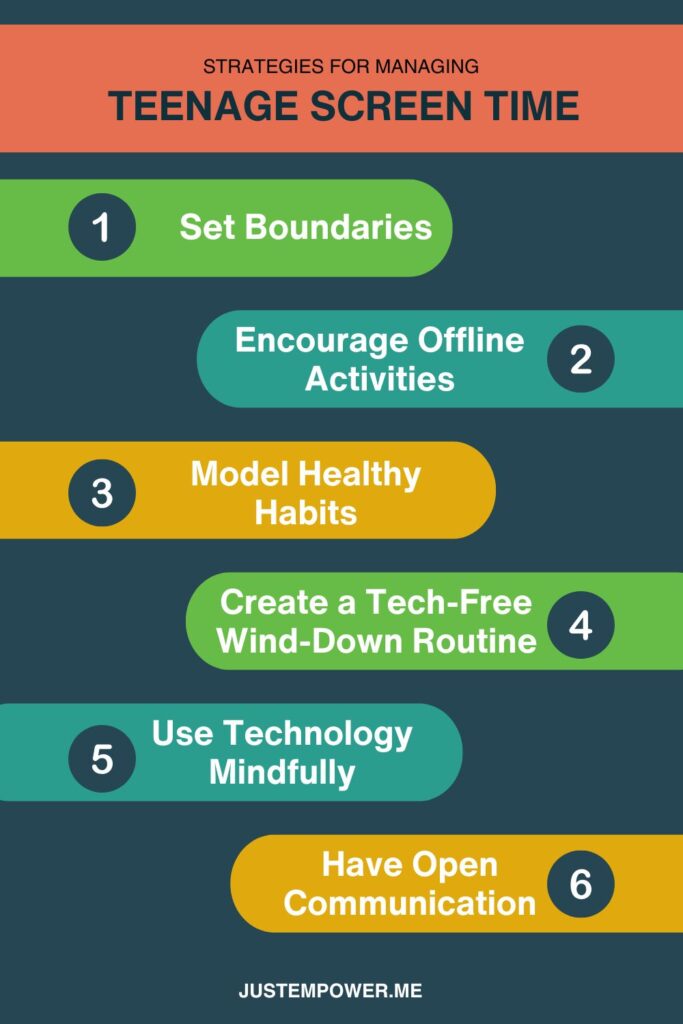
- Set a goal: Decide how much time you want to spend on screens each day and set a specific goal. For example, you might aim to cut back by 30 minutes a day or limit your screen time to only necessary tasks.
- Track your screen time: Use built-in features on your device or download an app to track your screen time. This will help you identify patterns and areas where you can cut back.
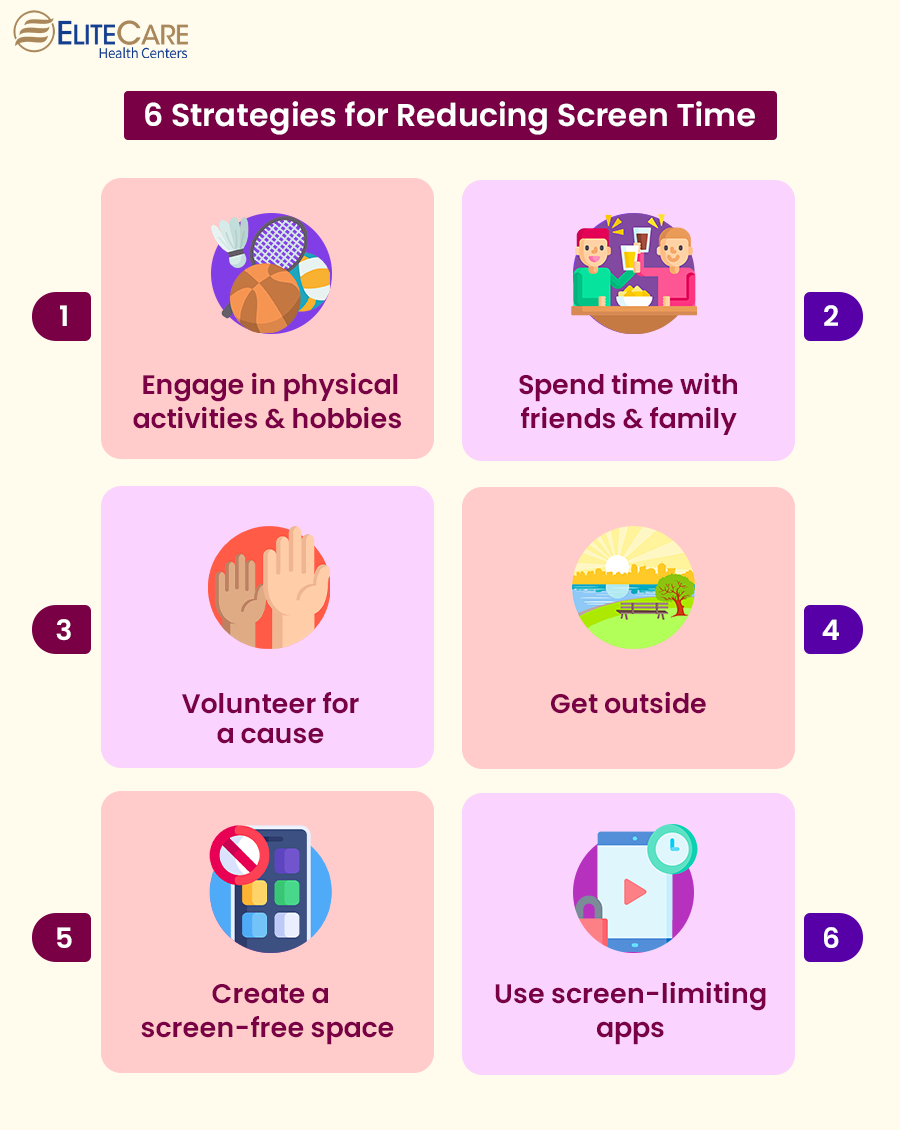
- Use screen-free times: Designate specific times of the day or week as screen-free, such as during meals, before bed, or on weekends.
- Find alternative activities: Engage in activities that bring you joy and fulfillment, such as exercise, reading, or spending time with loved ones.
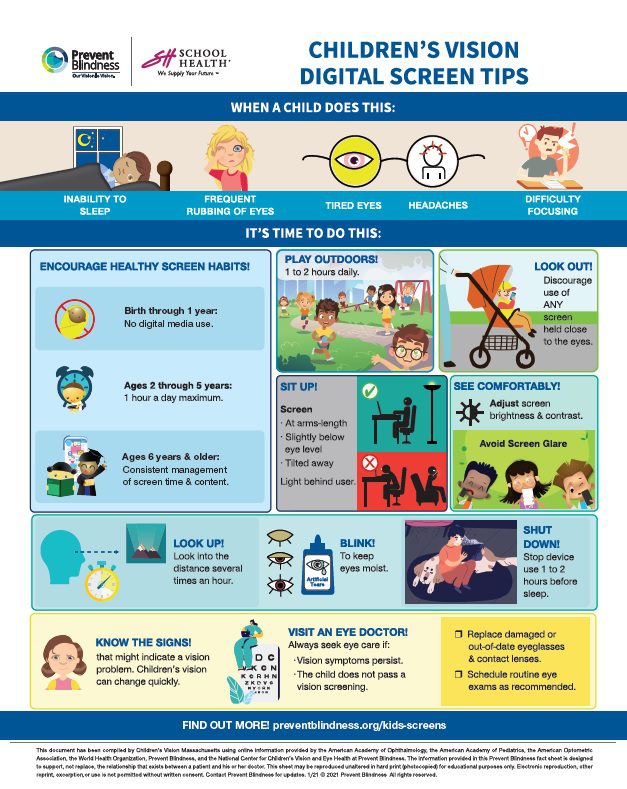
- Use the 20-20-20 rule: Every 20 minutes, look away from your screen and focus on something 20 feet away for 20 seconds to reduce eye strain.
- Get outside: Spend time in nature and engage in outdoor activities to reduce reliance on screens and boost mood and energy levels.
- Monitor your usage: Regularly review your screen time data and adjust your habits accordingly.
- Get support: Share your goals with a friend or family member and ask them to hold you accountable and provide support.

Overcoming Challenges and Staying Motivated
Reducing screen time can be challenging, especially if you're used to relying on screens for entertainment, socialization, or work. Here are some tips to help you stay motivated and overcome common challenges:
- Focus on the benefits: Remember the benefits of reducing screen time, such as improved sleep, reduced eye strain, and increased productivity.
- Celebrate milestones: Reward yourself for reaching your goals and making progress towards a healthier digital lifestyle.
- Find alternative forms of entertainment: Engage in hobbies, activities, or games that don't require screens, such as reading, puzzles, or board games.
- Make it a family affair: Involve your loved ones in your screen time reduction efforts and make it a team-building experience.
- Seek support: Join a community, attend workshops, or consult a health expert to get support and guidance on reducing screen time.
Conclusion
Reducing screen time takes time, effort, and commitment, but the benefits are well worth it. By following these tips for reducing screen time, you can create a healthier, more balanced digital lifestyle that improves your physical and mental well-being. Remember, every small step counts, and making progress is what matters most.
Get started today and take control of your digital life!