Eliminating Phubbing from Social Interactions: Understanding the Consequences and Strategies for Change
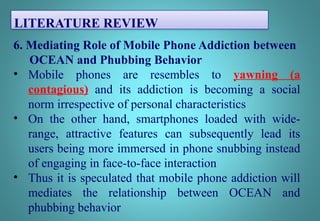
In today's digital age, smartphones have become an integral part of our daily lives, transforming the way we interact with others and express ourselves. However, this increased dependence on technology has given rise to a phenomenon known as phubbing, which refers to the act of ignoring someone in favor of engaging with a smartphone. Phubbing has significant consequences, affecting communication, relationships, and mental health across various social contexts.
A Brief History and Definition of Phubbing
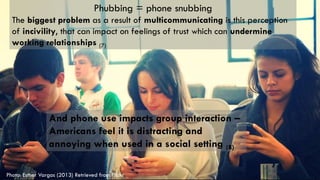
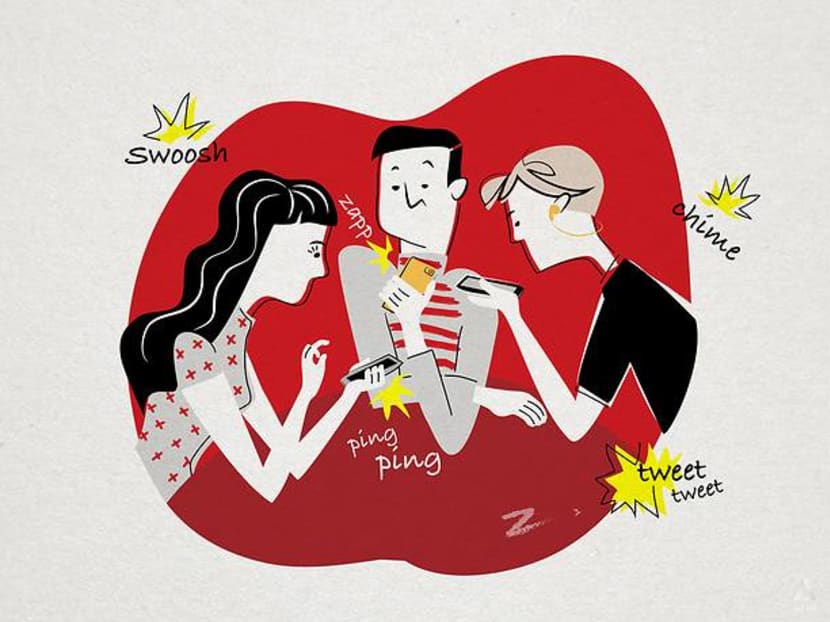
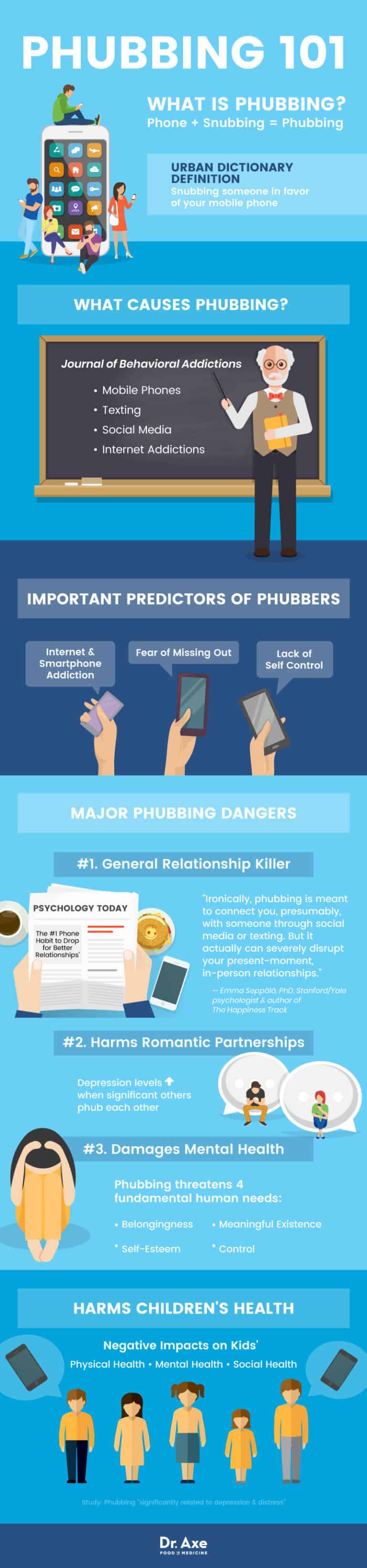
The term phubbing was first coined in 2010 by Chotpitayasunondh and Douglas, describing it as the act of snubbing someone in a social setting by focusing on one's phone instead of actively engaging with them. This behavior has become increasingly common, with research highlighting its prevalence in various social contexts, including romantic relationships, friendships, and family dynamics.
Types of Phubbing and Its Consequences
There are several types of phubbing, including:
- Partner phubbing: when one partner prioritizes phone use over interacting with their partner.
- Friend phubbing: when an individual prioritizes phone use over interacting with their friends.
- Family phubbing: when an individual prioritizes phone use over interacting with their family members.
- Public phubbing: when an individual prioritizes phone use in public settings, such as restaurants, parks, or public transportation.
The Psychology of Phubbing
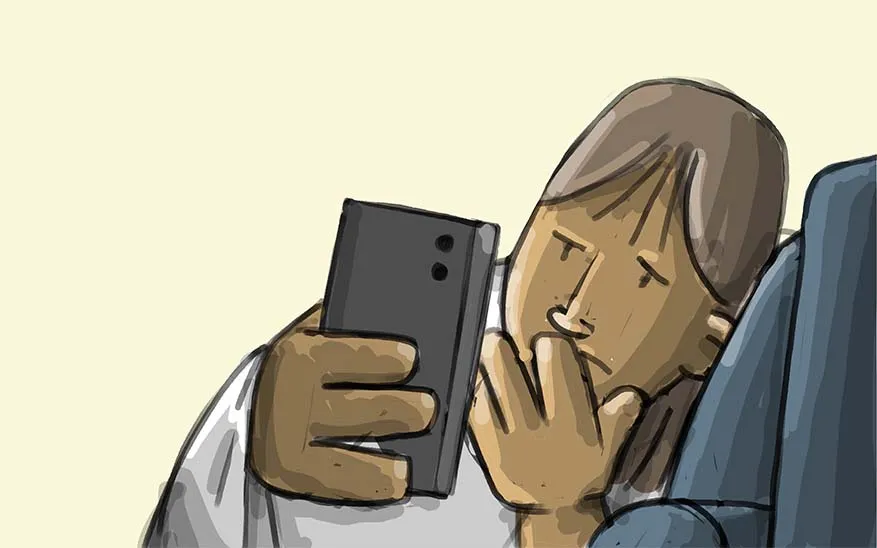
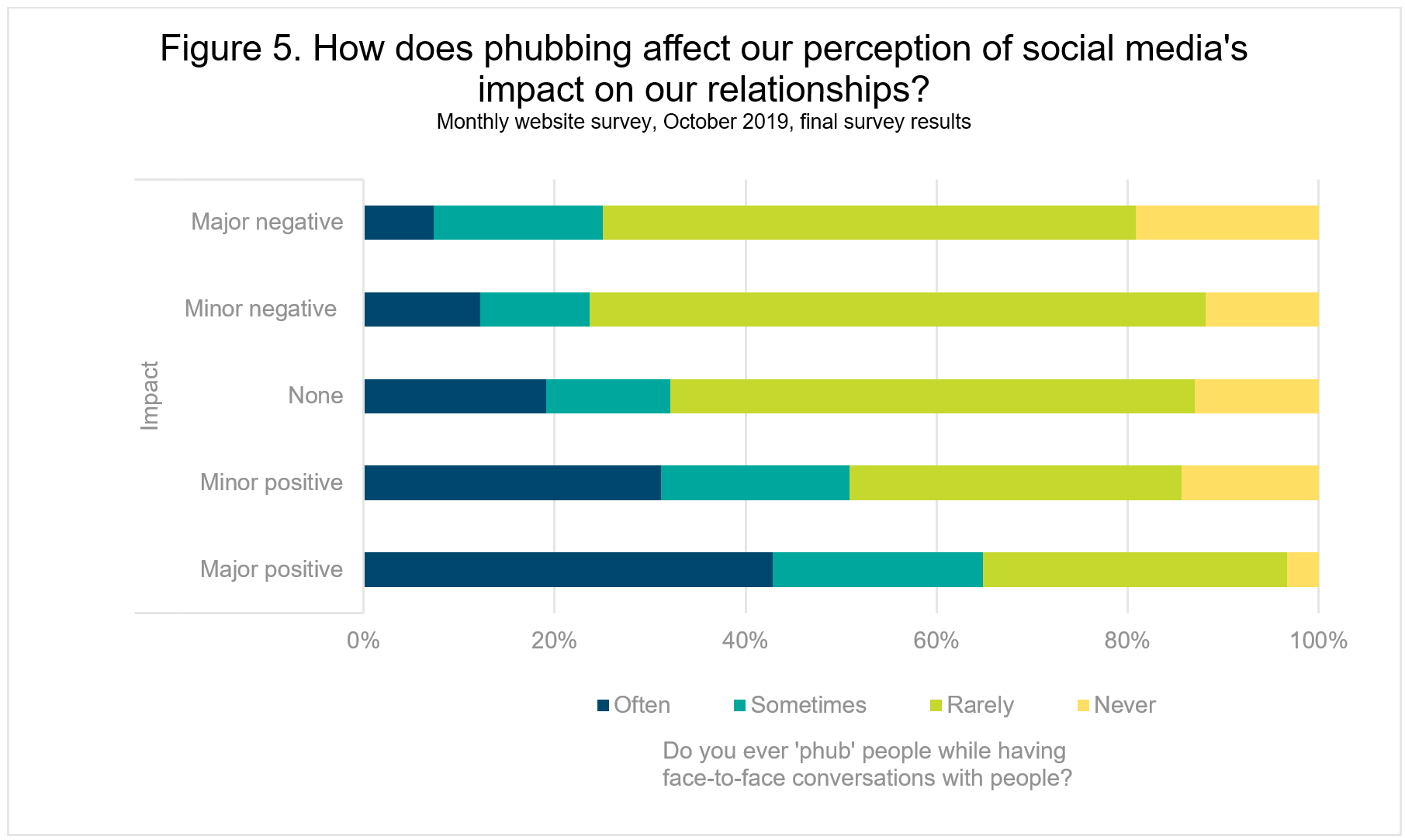
Phubbing has been linked to various mental health challenges, including depression, anxiety, and loneliness. By disrupting face-to-face conversations and reducing the quality of interpersonal interactions, phubbing can trigger feelings of exclusion and isolation. Research suggests that phubbing can also lead to a decrease in relationship satisfaction, jealousy, and social connections.
Strategies for Eliminating Phubbing from Social Interactions
Social interactions are essential for our emotional well-being, and eliminating phubbing is crucial for maintaining healthy relationships and mental health. Here are some strategies to help you overcome phubbing:
- Set boundaries:** Establish phone-free zones and times in your daily life, such as during meals, conversations, or family time.
- Practice mindfulness:** Be present in the moment and focus on the people around you, rather than your phone.
- Use phone-limiting features:** Take advantage of phone features that help you stay focused, such as screen time tracking, app blockers, or do-not-disturb modes.
- Develop social connections:** Make an effort to engage with others, participate in social activities, and nurture your relationships.
- Seek help:** If you struggle with excessive phone use or phubbing, consider seeking help from a mental health professional.
The Future of Phubbing
As technology continues to evolve, phubbing may become less prevalent. Innovations like AI-driven notifications, which prioritize essential alerts and minimize distractions, could help reduce the temptation to check phones during social interactions. Additionally, conscious tech habits and social support networks can play a crucial role in reducing phubbing behaviors and promoting healthier digital habits.
Conclusion
Phubbing is a significant issue in contemporary society, affecting communication, relationships, and mental health across various social contexts. By understanding the consequences and strategies for change, we can eliminate phubbing from our social interactions and foster healthier relationships and mental health. It's time to take control of our phone use and prioritize meaningful connections with others.