Python Tutorial for Beginners: Learn Python
Getting Started with Python
Are you new to the world of programming and wanting to learn Python? Look no further! This comprehensive tutorial will guide you through the basics of Python programming, providing you with a solid foundation to start your coding journey. Whether you're a complete beginner or looking to refresh your skills, this tutorial is designed to help you learn Python in a step-by-step manner.
Why Learn Python?
Python is a high-level programming language that is widely used in various fields, including web development, data science, artificial intelligence, and more. Its simplicity, flexibility, and extensive libraries make it an ideal language for beginners and experienced programmers alike. Learning Python can open doors to a wide range of career opportunities, and its demand continues to grow in the industry.
Getting Started with the Basics
To begin with, it's essential to understand the basic syntax and data types in Python. Variables, data types, and operators are the fundamental building blocks of any programming language, and Python is no exception. In this tutorial, we will cover the following topics:
- Variables and data types
- Operators
- Control structures (if-else statements, loops, etc.)
- Functions
Basic Syntax and Data Types
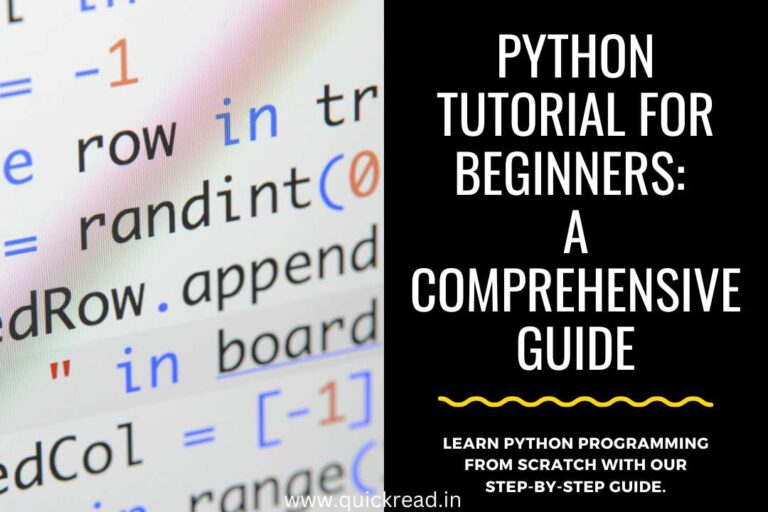
Python's syntax is straightforward and easy to read, making it an excellent choice for beginners. Python programming language uses indentation to define code blocks, which is a unique feature that sets it apart from other programming languages. The basic data types in Python are as follows:
- Integers (whole numbers, e.g., 1, 2, 3)
- Floats (decimal numbers, e.g., 3.14, -0.5)
- Strings (text, e.g., "hello", 'hello')
- Boolean (true or false)
- Lists (ordered collections of items, e.g., [1, 2, 3], ["a", "b", "c"])
- Dict (dictionaries, e.g., {"name": "John", "age": 30})
Practice and Resources
Learning by doing is one of the most effective ways to learn Python. Practice coding exercises and projects will help you reinforce your understanding of the concepts and apply them to real-world scenarios. Here are some excellent resources to get you started:
- Codecademy's Python course: A comprehensive interactive course covering the basics of Python programming.
- Python.org: The official Python website offers an interactive tutorial for beginners, which covers the basics of Python programming.
- W3Schools: W3Schools offers a Python tutorial and reference for beginners and professionals alike.
- Udemy's Python course: A video-based course covering the basics of Python programming and beyond.
Conclusion
In conclusion, Python is an excellent language to learn for beginners and experienced programmers alike. Its simplicity, flexibility, and extensive libraries make it an ideal choice for a wide range of applications. This tutorial has provided you with a basic understanding of Python programming, and with practice and dedication, you can become proficient in no time. Remember, learning a programming language is a continuous process, and there's always more to explore. Happy coding!

![Learn Python - Full Course for Beginners [Tutorial]](https://i.ytimg.com/vi/Z9YWsttHFU0/maxresdefault.jpg "Learn Python - Full Course for Beginners [Tutorial]")




![Python for Beginners - Full Course [Programming Tutorial]](https://i.ytimg.com/vi/q6V0cBzQ7bc/maxresdefault.jpg "Python for Beginners - Full Course [Programming Tutorial]")